Exploring the Use of Cone Mounts for Enhanced Vibration Damping
Understanding Vibration and Its Impact on Machinery
The Science of Vibration: Frequency and Stiffness
Vibration describes oscillations around an equilibrium point, often measured in terms of frequency and amplitude. In machinery, frequency relates to how often these oscillations occur over time, while stiffness indicates how resistant a system is to deformation when subjected to a force. High-frequency vibrations can lead to fatigue and failure in machine components, making understanding these concepts crucial for effective vibration control. Engineers utilize various metrics to analyze vibrations, ensuring machinery operates within safe limits. In industrial settings, vibrations can lead to increased wear and tear, resulting in costly repairs and downtime, emphasizing the need for robust vibration isolation solutions.
The Role of Vibration Isolation in Machinery Performance
Vibration isolation plays a vital role in enhancing machinery performance, promoting longevity, and ensuring operational efficiency. By minimizing the transmission of vibrations, vibration isolators protect sensitive components from damage. These isolators absorb and dissipate energy from vibrations, reducing the impact on surrounding structures and systems. Effective isolation prevents disruptions and enhances the reliability of critical equipment, such as generators and compressors. Proper vibration control not only extends the lifespan of machinery but also improves overall noise control within an industrial environment, fostering a safer and more productive workspace.
Common Sources of Vibration in Industrial Settings
Industrial environments frequently encounter various sources of vibration, including engines, compressors, pumps, and HVAC systems. Rotating machinery, particularly those with unbalanced components, generates significant vibrations that can propagate through structures. External factors like construction activities and traffic can also contribute to vibration levels within facilities. Understanding these sources helps in the selection of appropriate vibration damping solutions. Without adequate vibration control, these oscillations can lead to operational inefficiencies and potential safety hazards, underscoring the importance of addressing vibration issues proactively.
Cone Mounts: A Specialized Solution for Vibration Damping
Design Features of Cone Mounts
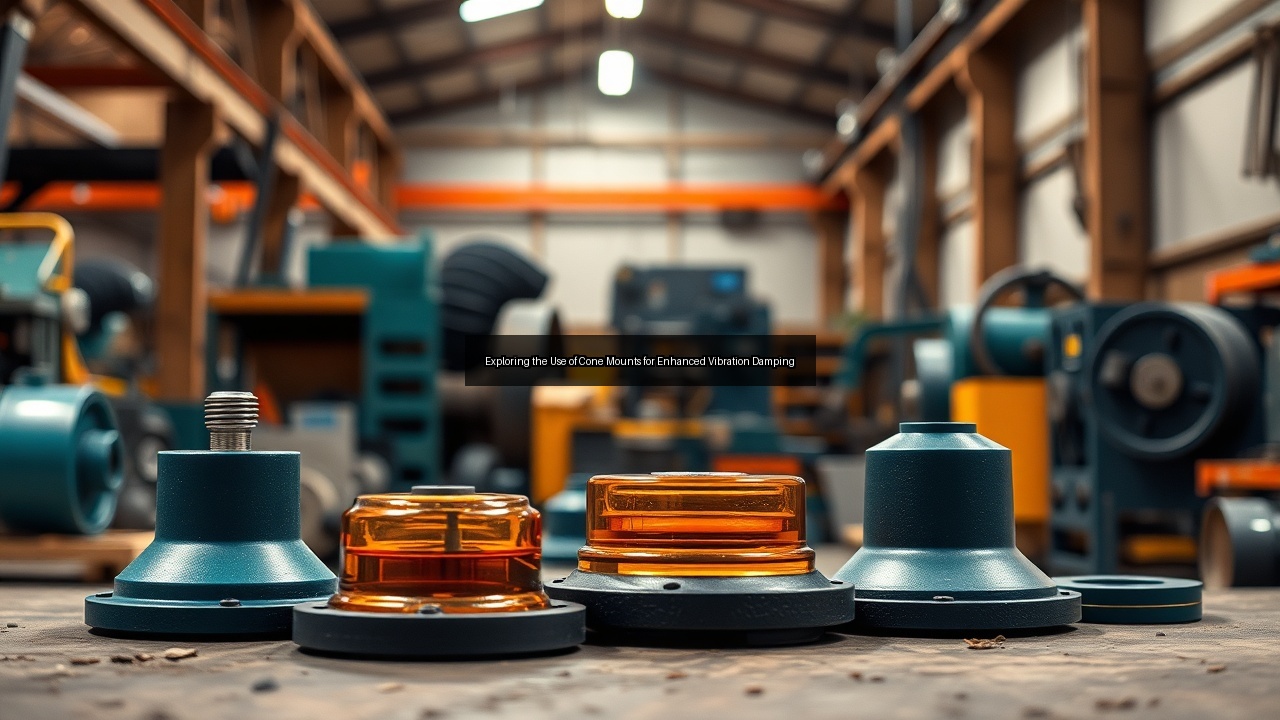
Cone mounts, a specialized type of anti vibration rubber mount, feature a distinct conical shape that enhances their effectiveness in vibration damping. This design allows for better load distribution and increased stiffness, making them suitable for various applications. The tapered profile helps control vibrations across different frequencies, ensuring a broader range of effectiveness compared to traditional mounts. Additionally, cone mounts often incorporate a central stud for easy installation, providing flexibility in mounting configurations. Their robust construction ensures durability, making them ideal for use in demanding environments such as marine and construction industries.
Material Choices: Natural Rubber vs. Neoprene
The choice of material significantly impacts the performance of vibration isolators. Natural rubber offers excellent elasticity and resilience, making it a popular choice for cone mounts. It provides effective vibration damping at lower frequencies, which is essential for machinery like engines and compressors. Neoprene, on the other hand, boasts superior resistance to oil, ozone, and temperature variations, making anti vibration rubber it suitable for harsher environments. Each material brings unique advantages, and selecting between natural rubber and neoprene depends on specific application requirements. Understanding these material properties allows engineers to tailor vibration control solutions effectively.
Applications in Marine and Construction Industries
Cone mounts find extensive applications in marine and construction industries due to their ability to withstand harsh environments while providing effective vibration isolation. In the marine sector, these mounts support engines and generators, dampening vibrations that could otherwise affect performance and longevity. Their design also minimizes noise transmission in enclosed spaces, enhancing comfort on vessels. In construction, cone mounts anti vibration mounts support heavy equipment and machinery, ensuring stable operation while reducing wear on structural components. Their versatility and effectiveness make them a preferred choice for engineers seeking reliable vibration damping solutions in these demanding fields.
Comparative Analysis: Cone Mounts vs. Other Anti Vibration Solutions
Traditional Anti Vibration Pads and Mounts
Traditional anti vibration pads and mounts, often made from rubber or elastomeric materials, serve a similar purpose as cone mounts but differ in design and application. While pads distribute loads evenly across a surface, they may not provide the same level of stiffness and directional control as cone mounts. Cone mounts excel in applications requiring precise alignment and enhanced vibration damping across various frequencies. In contrast, traditional pads may suffice for lighter machinery but often lack the durability needed for heavy industrial applications. Understanding these distinctions helps engineers choose the right solution for specific vibration control needs.
Elastomeric vs. Wire Rope Isolators
Elastomeric isolators and wire rope isolators represent two distinct approaches to vibration control. Elastomeric isolators, including cone mounts, provide superior damping characteristics, absorbing vibrations effectively. They are particularly beneficial in applications involving rotating machinery, where high-frequency vibrations are prevalent. Wire rope isolators, while effective for certain applications, often focus on isolating lower-frequency vibrations and may not provide the same level of damping. Moreover, wire rope systems can be more susceptible to environmental factors, limiting their applicability in certain industrial settings. Selecting between these options requires careful consideration of the specific vibration challenges faced.
Effectiveness in HVAC Systems and Generators
In HVAC systems and generators, effective vibration control directly impacts performance, efficiency, and operational noise levels. Cone mounts excel in these applications, offering robust vibration damping that enhances system reliability. HVAC systems, often subjected to continuous vibrations, benefit from the superior isolation properties of cone mounts, which reduce wear and potential failures. In generators, proper vibration control ensures consistent power output and minimizes noise pollution. The combination of effective materials, design features, and installation practices makes cone mounts a top choice for enhancing vibration isolation in these critical systems.
Implementing Cone Mounts for Optimal Vibration Control
Best Practices for Installation and Maintenance
Proper installation and maintenance of cone mounts are crucial for achieving optimal vibration control. Begin by ensuring the mounting surface is clean and level to facilitate maximum contact with the mount. Correct alignment of the machinery is essential to prevent uneven loading, which can compromise the mount's effectiveness. Regular inspections should be conducted to identify signs of wear or degradation, especially in environments subject to extreme conditions. By adhering to these best practices, facilities can maximize the performance of their vibration isolators, ensuring long-term reliability and reduced maintenance costs.
Selecting the Right Diameter and Height for Your Needs
Choosing the correct diameter and height for cone mounts is critical for effective vibration isolation. The diameter affects the load-bearing capacity and stability of the mount, while the height determines the level of vibration reduction. Engineers must consider the weight of the machinery, operating conditions, and specific vibration frequencies when making these selections. A well-matched cone mount ensures that vibrations are adequately absorbed, enhancing the performance of the machinery and prolonging its lifespan. Consulting manufacturer specifications and utilizing engineering calculations can guide the selection process effectively.
Case Studies: Successful Vibration Reduction in Machinery
Several case studies illustrate the successful implementation of cone mounts in various industrial applications, showcasing their effectiveness in vibration reduction. In one instance, a manufacturing facility replaced traditional rubber mounts with cone mounts for their compressors. The result was a significant decrease in vibration levels, leading to enhanced operational efficiency and reduced noise. Another case involved a marine engine installation where cone mounts minimized vibrations, improving crew comfort and extending equipment lifespan. These examples demonstrate the tangible benefits of employing cone mounts for vibration control, validating their importance in industrial machinery applications.